
The Science of Houseplants
A deeper look at how they actually live
Most houseplant advice is about what to do: water more, water less, feed more or less, move it, repot it, add this, buy that.
Yes, of course, some of that can help, but some of it doesn’t. And when it doesn’t, people tend to assume they’re doing something wrong, yet in our experience that’s rarely the case.
What usually goes wrong isn’t a care issue. It’s understanding how biology works.
Houseplants are living organisms that evolved in complex ecosystems, then get asked to survive in centrally heated rooms, with filtered light, static air, treated water, and biologically empty soil. They don’t fail because people don’t love them enough. They struggle because their support systems disappear.
This section isn’t about quick fixes or perfect leaves for social media. It’s about how houseplants really work, why they can struggle indoors, and what actually helps them long term.
If you’ve ever felt like plant care advice is contradictory or confusing or product-driven, you’re not alone, and that's coming from a company that builds products and life back into our sector.
"In reality, biology is not mysterious, but it is often misrepresented” so thats why we wrote this to explain some of the key houseplant facts"

Why Houseplant Advice Often Feels Confusing
Most houseplant advice is about what to do. Water more. Water less. Feed more or less. Move it. Repot it. Add this. Buy that. Much of it is well-meaning, and some of it genuinely helps.
But when it doesn’t, people often assume they’re doing something wrong. In our experience, that’s rarely the case.
Many people grow outstanding houseplants at home.
Understanding plant biology doesn’t replace good practice, it explains why it works when it does, and why it sometimes doesn’t. What usually goes wrong isn’t care itself, but how fragmented and disconnected most advice has become.
The internet is full of individual tips. What’s often missing is how those ideas fit together as a system
"This is why the same advice can work brilliantly for one plant and fail completely for another, even when both appear to be well cared for"


Where Houseplants Actually Come From
A large proportion of the plants we grow indoors originate from rainforests, jungle floors, riverbanks, and humid understories. These are environments where light shifts throughout the day, air moves constantly, and water arrives irregularly rather than on a schedule.
They are not neat or controlled places. They are layered, biologically active systems where plants evolved alongside fungi, bacteria, insects, and decaying organic matter. In these environments, nothing operates in isolation.
When we bring a plant into our homes, we are not just changing its location. We are changing the systems it once relied on. That doesn’t mean houseplants can’t adapt or perform well indoors, but it does change how they grow, cope, and recover over time.
Understanding where houseplants come from gives context to why indoor growing feels different, even when everything appears to be going well.
"Those natural origins help explain why many houseplants struggle with static indoor conditions, even when basic care seems correct"

Plants Are Part of Living Systems, Not Just Pots
In nature, plants are never on their own. They grow as part of living systems made up of roots, microbes, fungi, insects, organic matter, and chemistry, all interacting constantly. Even in environments that appear nutrient-poor, plants thrive because nutrients are continually recycled through biological activity.
Many rainforest soils, for example, are surprisingly low in stored nutrients. What makes them productive is not richness, but movement. Organic matter is broken down and rebuilt. Microbes exchange nutrients with roots. Energy flows through the system rather than sitting still.
You don’t need to recreate these environments indoors to grow healthy plants, and many people don’t. But understanding that plants evolved to work with living systems helps explain differences in resilience, recovery, and long-term stability rather than plants surviving at home on what is basically an artificial life support system.
"Even in a small pot, the presence or absence of biological activity changes how efficiently a plant can access nutrients and cope with stress"

What Changes When a Plant Comes Home
After leaving the glasshouse and retail environment, plants enter a very different set of conditions. The change is often subtle, but it is immediate.
Air becomes more static.
Light is filtered and fixed rather than moving.
Water is treated and chemically consistent.
Heat is dry and steady.
Substrates are often biologically quiet or sterile.
Microbial networks are limited or absent.
None of these conditions are mistakes. They are simply the reality of growing plants indoors with abiotic and biotic stress.
Plants don’t fail because of this shift, but they do have to adapt to it. That adaptation places extra demand on the plant’s internal systems, often long before any visible signs of stress appear.
"Each of these changes increases the load placed on the plant’s internal systems, often without obvious early warning signs.
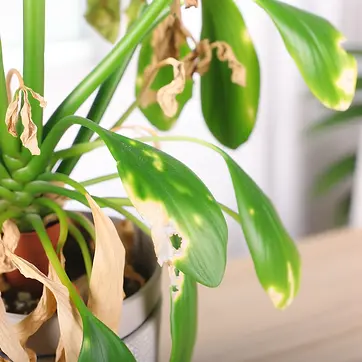
Surviving and Thriving Are Not the Same Thing
A plant can survive, grow, and even look impressive while operating in a reduced biological state. Many houseplants do exactly that, sometimes for years. Survival is not failure.
Thriving, however, shows up differently. It appears in resilience, faster recovery from stress, steadier growth, and lower susceptibility to pests and disease. These differences aren’t always obvious at first, but they become clearer over time.
In our lab work, trials, and real-world growing experience, we’ve repeatedly seen that plants supported by functioning biological systems behave differently. The changes are often subtle, but they compound, influencing how plants respond to stress, change, and challenge.
Understanding this distinction helps explain why two plants that look equally healthy can perform very differently months or years later.
"Over time, the difference shows up not just in appearance, but in resilience, recovery, and susceptibility to pests and disease"

Supporting Systems, Not Controlling Plants
Holistic plant care isn’t about controlling outcomes or chasing perfect appearances. It’s about supporting the biological systems plants evolved to work with, even within the limits of a small pot on a windowsill.
Symbiotic relationships still matter indoors. Roots, microbes, organic matter, and chemistry continue to interact, just on a smaller and often quieter scale. When those relationships are supported, plants tend to regulate themselves more effectively and cope better with change.
Our work focuses on understanding and supporting these systems. We combine biological research, lab trials, and real-world growing experience to develop approaches that work with plant biology rather than overriding it. The aim isn’t to replace good practice, but to strengthen the systems that make good practice effective.
"Houseplants are being kept alive by inputs, not supported by systems. Biological systems help plants regulate themselves, rather than constantly reacting to indoor conditions"
